Permits and rules for Highbury floral displays outside shops
Posted on 11/10/2026
If you run a shop in Highbury, a floral display outside the front door can do a lot of quiet heavy lifting. It softens the pavement, catches the eye, and gives your frontage a bit of life before a customer even steps inside. But the practical side matters too. Permits and rules for Highbury floral displays outside shops can affect what you place outside, how far it can project, whether you need permission, and how you keep people moving safely past your door.
That sounds dry on paper. In real life, it is usually about avoiding awkward surprises: a complaint from a neighbour, a visit from the council, or a display that looked lovely at 9 a.m. and becomes a trip hazard by lunchtime. This guide breaks the subject down in plain English, so you can plan a display that looks good, stays compliant, and actually works for your business.
Whether you are putting out a single planter, a pair of flower stands, or a seasonal arrangement that changes with the week, the aim is the same: attract attention without creating a nuisance. Let's get into it.
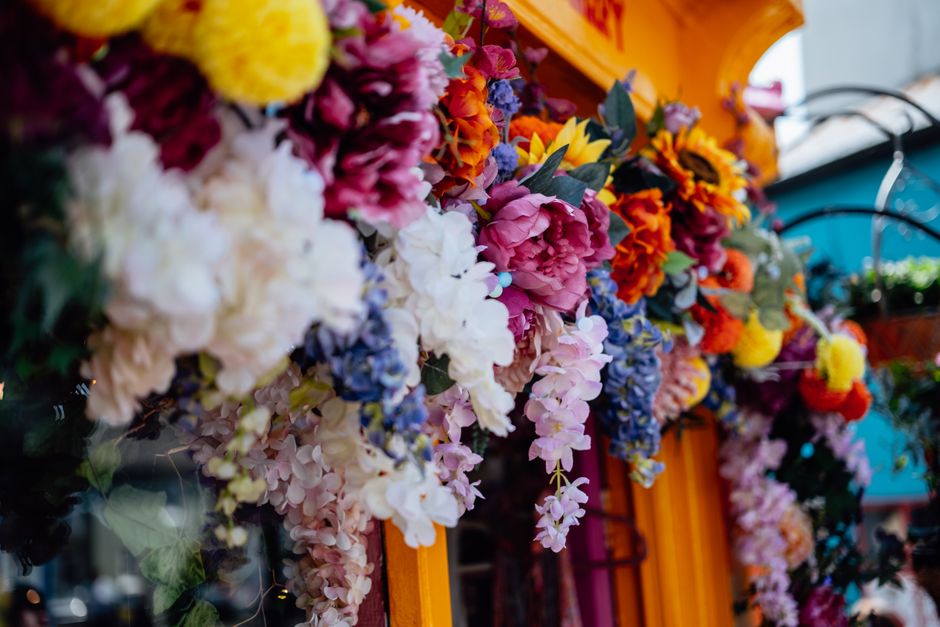
Why permits and rules matter
Outside displays are not just decoration. On a busy Highbury pavement, they can affect access, visibility, and movement in a very real way. A display that sits neatly against the shopfront may be fine. A display that narrows the pavement or blocks sightlines near a crossing may not be.
That is why the rules matter. They are there to balance two good things that can easily clash: a welcoming shopfront and a clear, safe public footway. In practice, the key concerns usually include:
- safe pedestrian access, including pushchairs, wheelchairs, and buggies
- clear routes for people with visual impairments
- maintaining enough space around entrances and exits
- avoiding clutter on the highway
- not creating a hazard in wind, rain, or busy footfall
- keeping within local expectations for frontage use
There is also a reputation angle. Shops that manage frontage displays neatly tend to look more credible and settled. In a neighbourhood like Highbury, where local detail matters and people notice the small things, that can make a difference. A tidy display suggests care. A cramped one suggests trouble, even if nobody says it out loud.
Expert summary: if your floral display extends beyond your shop boundary or sits on public pavement, assume you need to check the local rules before placing it out. The safest approach is to treat the pavement as shared space, not empty space.
How permits and rules usually work
The exact permission route can vary depending on the frontage, the width of the pavement, and whether your display sits wholly on private land or partly on public highway. The practical question is simple: is your floral display entirely inside your property line, or does it use shared public space?
If everything stays within your premises, the issue is usually easier. You still need to think about fire exits, access, visibility, and your lease terms, but the highway side is less likely to be a problem. If the display goes onto the pavement, even a little, you may need formal permission or to follow local highway rules. No two frontages are identical, which is why one shop can get away with a small standing arrangement while another cannot.
In real terms, the process often involves:
- measuring the usable pavement space outside your shop
- checking whether the flowers, planters, stands, or pots would obstruct movement
- confirming who controls the frontage: landlord, managing agent, or highway authority
- reviewing whether a permit, licence, or consent is needed
- deciding on placement, size, weight, and stability
- agreeing how often the display will be maintained and removed
Some businesses use floral displays as a seasonal feature. Others keep something on the pavement year-round. The bigger and more permanent the setup, the more likely it is that someone will ask questions about permissions, upkeep, or safety. That is normal. It is not a problem in itself. It just means you should be organised.
If you are already managing a wider flower business in the area, it can help to keep your wider stock, delivery, and display planning aligned. For example, many shops look at how their stock changes across delivery lines like flower delivery in Highbury N5 or seasonal ranges such as all flowers so the outside display reflects what they can actually supply cleanly and consistently.
Key benefits and practical advantages
Doing this properly is not just about avoiding a letter through the door. There are real commercial benefits to getting the setup right from day one.
- Better curb appeal: A disciplined display makes the shopfront feel cared for and current.
- Less compliance risk: You reduce the chance of complaints, warnings, or forced changes.
- Improved customer flow: People can stop and look without crowding the entrance.
- More predictable maintenance: You know what needs watering, cleaning, replacing, or bringing in at night.
- Stronger brand image: Floral frontage can reinforce your identity without shouting.
There is also a subtler benefit: confidence. When you know your display is properly set up, you are not second-guessing every arrangement. You can concentrate on the actual business of selling flowers, gifts, or related items. That steadiness shows.
To be fair, customers often read a frontage before they read signage. If the display feels balanced and professional, it creates trust before the first conversation. That is especially useful if you sell premium bouquets, same-day options, or occasion flowers like same-day flower delivery in Highbury N5 and best flower delivery Highbury N5, where presentation matters just as much as speed.
Who this is for and when it makes sense
This topic matters for more people than you might expect. It is not just for independent florists. Any retail business with flowers or decorative frontage should think about it.
- independent flower shops with pavement-facing windows
- gift shops that use live arrangements outside the door
- cafes and deli-style businesses adding flowers to soften the exterior
- property managers coordinating frontage rules for tenants
- pop-up businesses testing temporary external displays
- event-led retailers planning seasonal or promotional arrangements
It makes sense to think about permits and rules whenever the display changes the way people use the pavement. That includes a small pair of pots if they are placed in a narrow spot. It also includes temporary seasonal displays that come out for a day and, somehow, stay there for six weeks. Happens all the time.
You should also think carefully about it if the frontage is near a junction, busier pedestrian flow, steps, a narrow pavement, or an entrance used by more than one business. In those settings, even a visually lovely display can become a practical nuisance very quickly.
If you are curating displays for special occasions, you might also want to match your external presentation with in-store lines such as birthday flowers, anniversary arrangements, or a simple florist choice selection. That way, the front of the shop feels coherent rather than random.
Step-by-step guidance
If you want a practical route through the issue, use this sequence. It is not glamorous, but it works.
1. Measure the space properly
Do not guess. Stand outside at the busiest time of day and measure the usable frontage. Account for door swing, passers-by, pushchairs, bins, railings, and any street furniture. What looks generous at 7 a.m. can feel tight by 5 p.m.
2. Decide what the display actually is
There is a difference between a few decorative pots and a semi-permanent installation. Is it loose, fixed, wheeled, weighted, or hanging? The more it behaves like a structure, the more likely it is to need formal checking.
3. Confirm ownership and responsibility
Find out who controls the frontage. Sometimes that is straightforward. Sometimes the shopfront is part of a lease, the pavement sits under highway control, and the landlord wants a say too. This is where a five-minute assumption can become a five-week headache.
4. Check the local permission route
Look at whether you need a licence, a consent, or simply a written agreement. In London, the route can depend on the exact location and the nature of the display. If in doubt, ask before placing anything outside. Better a slightly delayed launch than a forced removal on a windy Tuesday.
5. Build for safety first
Choose stable containers, weather-resistant materials, and arrangements that cannot easily topple. Make sure nothing sharp, breakable, or fragile is left where people will brush past it. A display should survive a nudge. If it cannot, it probably needs rethinking.
6. Set a maintenance routine
Watering, trimming, sweeping petals, and replacing tired blooms matter more than many owners expect. A display that starts fresh but droops by Thursday does not help the brand. Maintenance is part of compliance, really.
7. Review after a week
Check how people move around it in real life. Watch the flow. Do customers linger awkwardly? Do delivery drivers side-step it? Does the arrangement sit fine in daylight but awkward at dusk? Small adjustments make a big difference.
Expert tips for better results
The shops that do this well usually share a few habits. Nothing magical. Just disciplined, tidy decisions made consistently.
- Keep the footprint smaller than you think. What feels modest inside the shop often looks bigger outside.
- Use height carefully. Tall arrangements can be beautiful, but they should not block sightlines or create blind corners.
- Choose colours that read well from a distance. Mixed colour blocks often work better than too many tiny components.
- Stick to easy-to-maintain varieties. Petals that shed heavily can make the pavement messy fast.
- Think in layers. A low base with one or two accent pieces often looks more polished than a crowded cluster.
- Night planning matters. If the display stays out after dark, make sure it is visible and secure.
One small but useful trick: photograph the frontage before you put the display out, then photograph it after. It sounds obvious. It also helps if a neighbour later says, "It never looked like that before."
For stock that supports neat, repeatable frontage work, many florists prefer predictable stems and cleaner finishes. You can build a reliable visual rhythm with products in ranges like best sellers, luxury flowers, or a softer palette such as white and mixed colours. That kind of consistency really does help when you are refreshing a display every few days.
Common mistakes to avoid
The mistakes here are usually not dramatic. They are small, cumulative, and very avoidable. Which is almost more annoying, if we are honest.
- Assuming a display is "too small to matter". Even small items can create obstruction on a tight pavement.
- Forgetting about accessibility. A display should not force people into the road or into a bottleneck.
- Using unstable stands or lightweight pots. Wind is not your friend here.
- Letting flowers overhang the walking line. Pretty is not the same as practical.
- Ignoring landlord or lease restrictions. Private permission issues can be separate from highway issues.
- Setting and forgetting. Displays change with weather, footfall, and the season.
- Creating visual clutter. More is not always more. Sometimes it is just more.
Another easy mistake is treating compliance as a one-time task. It is not. If you swap a low arrangement for a larger one, or move the display closer to the kerb, you may have changed the risk profile. That is the kind of detail that catches busy shop owners out.
If you are also managing delivery commitments, service quality, and presentation standards, it can help to review your wider customer promises alongside the frontage. Pages such as guarantees, delivery, and flower care are useful reminders that the display outside and the service inside should feel like the same business.
Tools, resources and recommendations
You do not need a giant toolkit, but a few simple items make life easier.
- Tape measure: to check the real width of the frontage and walking space.
- Phone camera: to record placement, condition, and changes over time.
- Weighted pots or stable bases: especially for exposed spots.
- Watering cans or hidden irrigation aids: for consistent upkeep.
- Cleaning cloths and sweepers: petals, soil, and water marks build up faster than people think.
- Weather check habit: a quick glance at wind and rain can save a display.
From a business point of view, the most useful resource is usually a simple internal routine: who sets the display, who checks it, who signs off changes, and who contacts the relevant authority if needed. That is a lot more effective than everyone vaguely assuming "someone else sorted it".
For broader business admin, it is also worth having the right company pages in place so customers and partners can find what they need. Information like about us, contact us, and accessibility statement can help support trust when the public is looking at your shopfront and deciding whether to step inside.
Law, compliance, standards, and best practice
For a topic like this, it is safer to think in terms of compliance principles rather than pretending there is one neat rule that covers every Highbury frontage. The key legal and practical concerns usually sit around public access, highway obstruction, safety, and property permissions.
That means you should be careful about:
- whether your display is on private land or public highway
- the width and usability of the remaining footway
- trip, slip, and knock-over risks
- visibility near doors, crossings, and corners
- lease or landlord restrictions on external additions
- keeping the display in a condition that does not become a nuisance
Best practice tends to be simple: keep the display tidy, keep it stable, keep it narrow enough for easy passage, and keep records of any permission or agreement. If you have approval, keep a copy. If the display changes significantly, review the approval. If you are unsure, ask. That is not being overcautious. It is just sensible.
In a shared urban setting, accessibility matters more than owners sometimes realise. A display that feels charming to one person can feel genuinely awkward to someone using a mobility aid, carrying shopping, or navigating with a pram. And yes, the weather matters too. A wet morning in London changes how people move. They keep to the dry edge, they bunch together, and suddenly your flower stand is in everybody's way. Small thing. Big effect.
Options, methods, and comparison table
There are several ways to present flowers outside a shop. The right choice depends on your frontage, the weather exposure, and how much admin you are willing to manage.
| Display method | Typical look | Compliance pressure | Best for | Watch-outs |
|---|---|---|---|---|
| Small pots at the entrance | Simple, welcoming | Lower, if placed well | Narrow frontages and modest branding | Can still obstruct if placed too close to the door |
| Raised flower stands | Visible from a distance | Medium to high | Busier retail streets | Wind, toppling, and sightline issues |
| Linear pavement display | Strong visual impact | Higher | Longer frontages with space to spare | Needs careful measurement and regular maintenance |
| Window-sill or internal frontage arrangement | Neat and contained | Lower | Businesses avoiding pavement use | Less visible from a distance |
If you want the least stressful route, internal or boundary-safe frontage arrangements are often easiest. If you want more visual punch, you can still do that, but the display needs tighter control. There is always a trade-off. Always.
Case study or real-world example
Imagine a small florist in Highbury that wants to brighten the entrance with a mix of seasonal blooms. The owner starts with two large pots and a low basket arrangement at the threshold. It looks lovely in the shop photo. On the pavement, though, the basket narrows the passage, especially when delivery drivers, school-run foot traffic, and a couple of prams all arrive at once.
Instead of pushing ahead, the owner reshapes the plan. The pots are moved fully inside the boundary line. The basket is replaced with a slimmer display that sits against the shopfront rather than out on the footway. The colours stay the same, the visual effect stays strong, and the pavement remains clear. A simple adjustment, really. But it avoids a problem before it starts.
That is usually the best outcome in this area of work: not the biggest display, but the smartest one. The version that looks good, works in bad weather, and does not become an obstacle by Thursday afternoon.
Practical checklist
Use this quick checklist before putting floral displays outside your shop.
- Have I measured the usable pavement space accurately?
- Is the display fully within my property boundary, or does it touch public space?
- Do I know who owns or controls the frontage?
- Have I checked whether a permit, licence, or written permission is needed?
- Is there enough room for wheelchair users, prams, and general foot traffic?
- Will the display stay stable in wind and rain?
- Can staff water, clean, and maintain it daily?
- Does it leave doors, exits, and sightlines clear?
- Have I reviewed lease or landlord conditions?
- Am I happy to remove or adjust it quickly if needed?
If you can answer yes to all of those without hesitation, you are in a much better place than most. Not perfect, just better. And in practice, that is usually enough to avoid drama.
Conclusion
Permits and rules for Highbury floral displays outside shops are really about balance: beauty on one side, safe access on the other. A good display can make your shop feel warmer, more memorable, and more inviting. A careless one can cause friction, complaints, or compliance trouble that nobody wants.
The safest approach is simple. Measure properly. Keep the route clear. Check permissions early. Build for weather and footfall. Maintain the display as part of everyday shop management, not as an afterthought. When you do that, your frontage becomes an asset rather than a risk.
If you are planning a new shopfront display or reviewing an existing one, take the time to get the foundations right. It is a small bit of care that pays for itself many times over. And honestly, that's the sort of detail people notice, even if they never mention it.
Get a free quote today and see how much you can save.
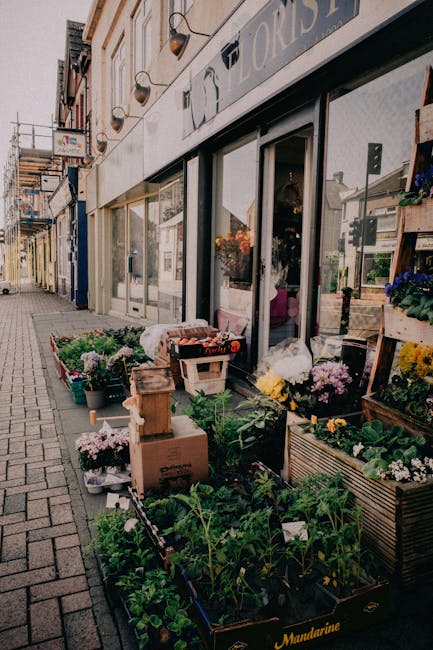
Frequently asked questions
Do I need permission for flowers outside my shop in Highbury?
If the flowers stay entirely within your own property boundary, you may not need highway permission, but you should still check lease terms and safety issues. If anything goes onto the pavement, permission may be needed.
What counts as a floral display outside a shop?
It can include pots, baskets, planters, stands, tiered arrangements, seasonal installations, or grouped flowers placed at or near the frontage. The practical issue is whether it affects public access.
Can I put flower pots on the pavement outside my shop?
Sometimes, but not automatically. Pavement placement can raise highway and safety concerns, especially on narrow or busy streets. Always check before setting them out.
How wide does the pavement need to be?
There is no one-size-fits-all answer. The remaining route should allow comfortable movement for pedestrians, wheelchair users, and prams. If the space feels tight in real life, it probably is.
Do temporary seasonal displays need the same checks as permanent ones?
Yes, in principle. Temporary does not mean exempt. A display that is only outside for a few weeks can still obstruct the pavement or create a hazard.
What is the biggest compliance mistake shops make?
Assuming a display is too small to matter. In practice, even modest arrangements can cause issues if they sit in the wrong place or are left unmanaged.
Can a landlord stop me from placing flowers outside?
Yes, sometimes. Lease terms, building rules, and landlord approvals can all affect what you are allowed to do, even before highway rules come into play.
How often should an outside floral display be checked?
Ideally every day, with extra checks after windy, wet, or busy trading periods. Flowers move, pots shift, and pedestrians are not always gentle.
What flowers or containers are best for outside displays?
Choose sturdy containers, stable bases, and flowers that hold up well in changing weather. Practical, low-shed arrangements are usually easier to manage than delicate, high-maintenance ones.
What should I do if someone complains about my display?
Respond calmly, review the placement, and check whether the concern is about access, safety, or permissions. A quick adjustment often resolves things before they grow legs.
Is there a difference between decorative flowers and advertising displays?
Sometimes, yes. If the display is being used as part of frontage branding or customer attraction, it may be treated differently from a purely private decoration. The context matters.
Where can I align the display with my wider flower business?
Look at your core ranges, delivery timing, and seasonal stock so the frontage feels consistent with the rest of your offer. Pages like florist Highbury N5 and flower shops Highbury N5 can help you frame the right local presentation.
What if I only want a very small display?
Small is easier, but it is not automatically exempt. A tiny arrangement can still matter if it sits in a narrow point or creates a trip or bottleneck risk.
Should I keep records of permission or approval?
Yes. Keep copies of any written approval, lease note, or internal agreement. If questions come up later, having the paperwork makes life much easier.
Can floral displays help sales?
Absolutely. A good frontage draws the eye, signals care, and can encourage walk-in traffic. Just make sure the display is tidy and compliant, because beauty loses its shine pretty quickly if it becomes a nuisance.


